- Unit 4 Ffordd Richard Davies St. Asaph Business Park, St. Asaph LL17 0LJ
- 01745 797 373
- 0800 059 9073

- Home
- About
- Services
- Door Supervisors
- Industrial Security Services
- Retail Security Services
- Event Security Services
- Static Security Services
- Festival Security Services
- Crowd Management
- CCTV Services
- Stewarding
- TV & Film Security Services
- Hotel security Services
- Security Dog Handlers Services
- Reception Security Services
- Construction Site Security Guards Services
- Location
- Contact
- SIA Information Update
- Apply Now
Dog Handling Event Security for Safer Events
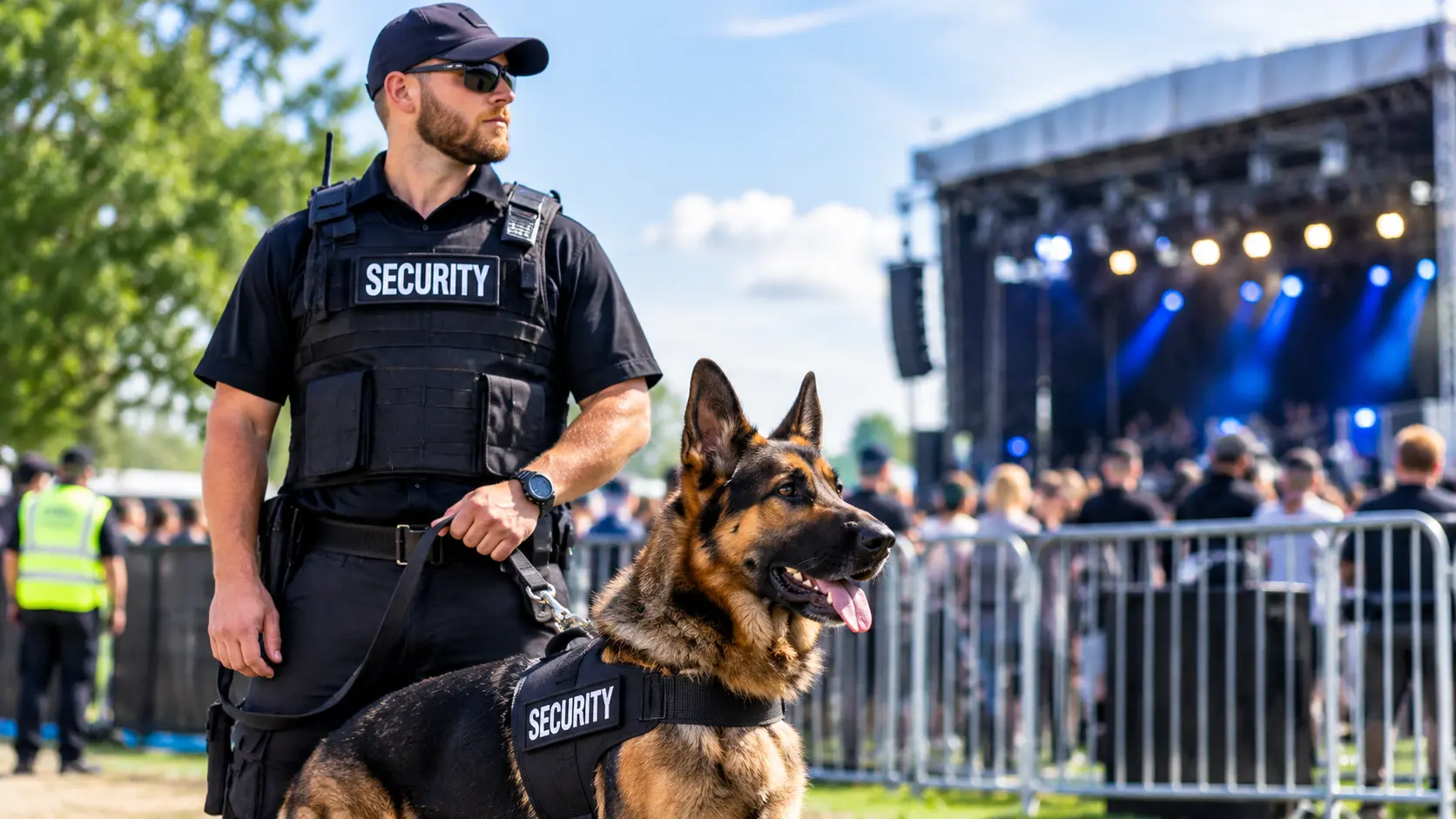
Events of all sizes require careful security planning to protect attendees, staff, performers, and property. From outdoor festivals and concerts to corporate gatherings and private functions, organizers must consider access control, crowd movement, and potential security risks. Dog handling event security is an effective option for venues that need a visible security presence and additional support from trained security dogs and professional handlers.
AG Security Care Ltd provides security services for different environments, including events and commercial premises. With trained dog handlers and appropriate security procedures, event organizers can establish a more controlled environment while helping visitors feel safe throughout the occasion.
What Is Dog Handling Event Security?
Dog handling event security involves professional security personnel working alongside trained security dogs to support event safety. The handler manages the dog, follows established security procedures, and monitors the surrounding environment. Depending on the event’s requirements, this team may assist with visible deterrence, patrols, access monitoring, and security checks.
Security dogs can offer capabilities that complement conventional security staff. Their presence may discourage unauthorized access and help security teams pay closer attention to specific areas. The precise duties depend on the dog’s training, the handler’s qualifications, the venue, and the event’s risk assessment.
This service can be considered for public gatherings, music festivals, sporting occasions, exhibitions, outdoor celebrations, and private events. Organizers should determine whether dog handling is suitable for the venue and audience before including it in the security plan.
Why Do Events Need Professional Security Dogs?
Large events can attract substantial crowds, temporary vendors, contractors, performers, and visitors who may be unfamiliar with the venue. Managing these different groups requires clear procedures and trained personnel who understand how to respond to changing situations.
Professional dog handling can provide an additional visible security presence. For some events, this may help discourage disruptive behaviour and unauthorized entry. It can also support wider security arrangements when combined with access control, trained guards, CCTV monitoring, and emergency planning.
A professional handler understands how to control the dog, interpret its behaviour, and maintain appropriate working distances from attendees. This is particularly important in busy environments where children, families, and people with different accessibility needs may be present.
Dog handling should not replace other essential security measures. Instead, it should form part of a coordinated plan based on the event’s size, location, expected attendance, and potential risks.
Suitable Events for Dog Handling Services
Different events present different security challenges. A music festival may require perimeter monitoring and controlled entry points, while a corporate event may focus on protecting equipment, managing guest access, and securing restricted areas.
Outdoor concerts and festivals can benefit from a visible security presence around designated boundaries, backstage areas, and other authorized patrol zones. Sporting events may require support around entrances, equipment storage areas, and locations where access needs to remain restricted.
Exhibitions and trade shows often contain valuable displays, technical equipment, and temporary installations. Event organizers may consider dog handling as part of their wider security arrangements, particularly outside public opening hours or in suitable perimeter areas.
Private celebrations and corporate functions can also require professional security, especially where guest lists, restricted areas, or valuable property need protection. The level of security should always reflect the actual risks rather than the event’s size alone.
The Importance of Trained Dog Handlers
A security dog is only one part of an effective dog handling team. The handler’s training, judgement, communication skills, and ability to maintain control are essential to safe operations.
Before an event begins, handlers should understand the venue layout, entry and exit points, emergency procedures, restricted zones, and the responsibilities of other security personnel. This preparation helps them work alongside event managers and security supervisors.
Handlers must also understand canine behaviour and recognize when a dog needs rest, water, or a change in working conditions. Noise, lighting, dense crowds, and unfamiliar surroundings can affect a dog’s behaviour. Appropriate breaks and suitable working conditions are therefore important.
Clear communication is equally necessary. If a handler identifies a potential concern, the information should be passed to the relevant security supervisor through the agreed communication system. This allows the wider team to assess the situation and respond according to the event’s procedures.
Professional dog handling should prioritise controlled behaviour, public safety, and responsible working practices at every stage.
Combining Dog Handling with Other Security Measures
The strongest event security plans use several measures that work together. Security dogs and handlers may support perimeter patrols, while other guards manage entrances, check credentials, and assist visitors.
CCTV monitoring can help security teams observe areas that are difficult to supervise directly. Radio communication allows personnel to share information quickly, and clearly marked restricted zones help prevent accidental entry into operational areas.
Before selecting dog handling services, organisers should consider the venue’s physical layout, the expected number of attendees, the event schedule, and any known security concerns. They should also confirm whether the proposed arrangements meet applicable licensing, insurance, animal welfare, and health and safety requirements.
Not every event needs security dogs. In some settings, the presence of animals may be unsuitable because of crowd density, accessibility requirements, or the nature of the activity. A professional assessment helps determine whether dog handling is an appropriate option.
Dog Security for Commercial and Industrial Locations
Although event security is a key application, trained dog handlers may also support security operations at business premises. Warehouses, industrial facilities, distribution centres, and commercial sites can contain valuable equipment, stock, vehicles, and materials that require protection.
Businesses looking for warehouse security with dogs services may consider professional handlers as part of an overall site security plan. Depending on the site’s risk assessment, dog teams may support authorised patrols, perimeter observation, and the monitoring of designated areas.
Similarly, businesses considering guard dogs for commercial property should assess the property’s layout, public access arrangements, operational hours, and the suitability of dog handling for the environment. Secure fencing, appropriate signage, trained personnel, and clear procedures are important considerations.
Commercial security arrangements should be planned around the specific risks of each location. A system that works for a large industrial site may not be appropriate for a busy retail premises or a public-facing office.
Choosing an Event Security Provider
Selecting a suitable security provider requires more than comparing prices. Event organisers should look for a company that understands operational planning, communication, and the responsibilities involved in working with security dogs.
Ask about the qualifications and experience of the handlers, the dogs’ training, insurance arrangements, and procedures for managing public interactions. It is also sensible to discuss the event schedule, site access, emergency contacts, and the number of personnel required.
A clear security plan should identify each team’s duties and explain how incidents will be reported. Organisers should also confirm how the provider will manage animal welfare and ensure that the proposed arrangements are appropriate for the venue.
AG Security Care Ltd offers security dog handling services for clients seeking professional support for suitable security requirements. Discussing your event’s location, attendance, operating hours, and security concerns can help establish which arrangements may be appropriate.
Contact AG Security Care Ltd for Dog Handling Event Security
Effective event security begins with preparation, trained personnel, and a clear understanding of potential risks. Dog handling event security can provide an additional layer of visible protection when it is suitable for the venue and supported by responsible working practices.
Whether you are planning a festival, concert, corporate function, or another organised gathering, consider how professional dog handlers could fit into your wider security arrangements.